

Chapter Five: Communicate, Communicate, Communicate
Why intentional, inclusive communication is essential to successful city building.


Too often, communication related to civic projects is limited. It typically includes announcements about what the lead agency is planning, invitations to community meetings to hear about projects and give opinions, and damage control when the community responds negatively. Most of the time, someone from the planning team handles the external communications.
I believe the success of large city building projects is dependent on comprehensive internal and external communications throughout the life of a project. If the ultimate goal is to build a project, which is reliant on cultivating a diverse project community, dedicated communications staff must be hired and a multi-dimensional communications approach must be implemented for the duration of the project.
Connecting people to a place and project is the foundation of a successful communications plan. Using a variety of platforms, systems and techniques will educate and inspire the community to support the project and commit time, talent and trust to the initiative. A comprehensive communications approach is imperative to supporting a transparent process, building understanding and trust and nurturing relationships along the way.
In order to cultivate the largest audience possible, the communications scheme should develop documents and approaches that:
Have a clear, compelling and relatable graphic identity including imagery
Use language that is easy to understand for both community members and design professionals - and is available in the spoken languages of the community
Use multiple mediums and platforms
Communicate internally among leadership, partners, staff and consultants as well as externally to the larger project community
City building is complex in nature, and communities are often distrustful because of past experiences. To help more people understand and engage, the content and presentation should:
Break down the issues, opportunities and proposals into easy-to-understand pieces before building them up
Incorporate community ideas into concepts, so the community knows they are being heard
Make the process and the product feel real by showing concepts on paper and online, and sharing them widely
Define expectations of the process and project from the beginning – clearly laying out timelines, deliverables, costs, roles and responsibilities.
Below is a DRAFT comprehensive matrix of communications strategies, components and examples to illustrate what could be done. Of course, every communications strategy should be reflective of the type of project and the project community.
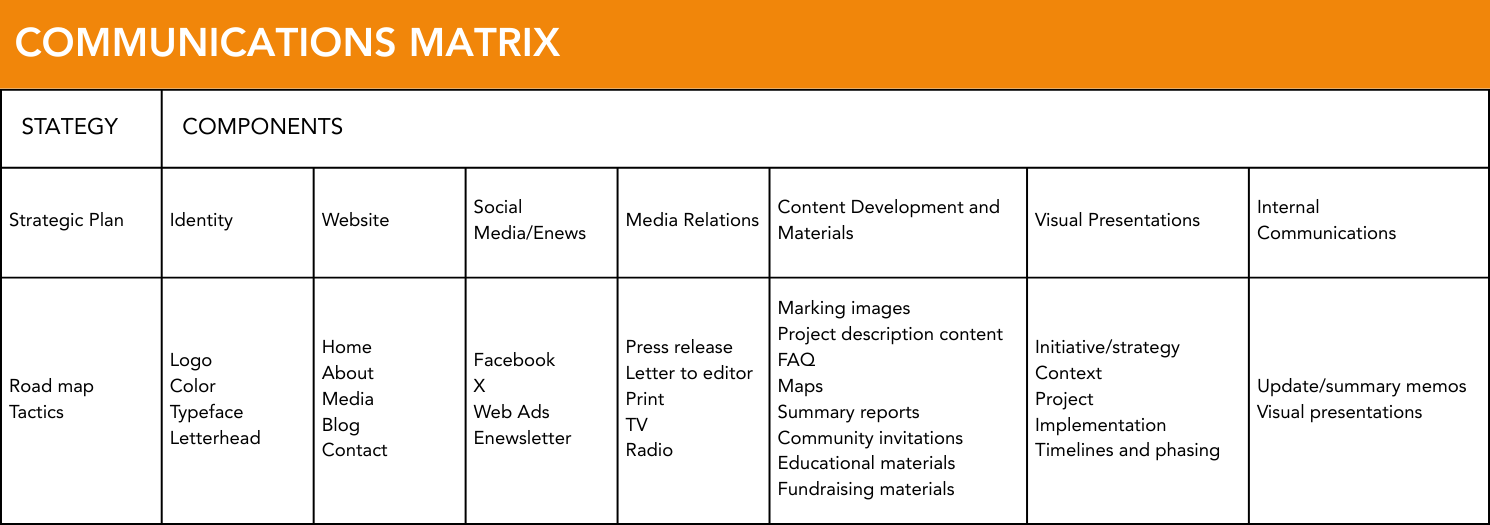
Examples of Communications Components:
Strategic Plan: GRPC Strategic Plan
Website: www.greatriverpassage.org
Social Media: GRPC Facebook
Media Relations: Editorial: “A pivotal moment to invest in the Mississippi River”
Content Development and Materials: “Currently” - Quarterly Magazine and River Balcony Project Brief
Visual Presentations: Great River Passage Virtual Speaker Series
Let’s keep the conversation going - I'd love to hear how you’ve used communication to build trust, understanding, and connection within your project community.
Stay tuned for an addendum to this chapter that discusses the value of revealing an authentic identity of a place and project.
Yours in connecting people to place and project,
Mary deLaittre
marydelaittre.com